
The Impact of Poor Sleep on Your Eyesight


How Sleep Deprivation Affects Your Eyes
Your eyes are constantly working throughout the day, and they rely on sleep to repair and recharge. When sleep is reduced or poor in quality, several important eye functions are disrupted in ways that affect how you see and feel.
While you sleep, your tear glands replenish the thin layer of moisture that coats your eyes. Without enough sleep, tear production decreases, leaving your eyes dry and uncomfortable from the moment you wake up. Symptoms often become worse as the day progresses, especially in air-conditioned spaces or dry environments.
The small muscles inside and around your eyes control focus and eye movement, and they need rest to recover from a full day of use. When you are fatigued, these muscles become sluggish and less responsive. Shifting your gaze between near and far objects, reading, or using a screen can feel like more effort than it should.
Lack of sleep causes the tiny blood vessels on the surface of your eyes to widen, which makes the whites of your eyes appear pink or red. The longer you go without adequate rest, the more noticeable this redness becomes.
- Expanded vessels bring extra blood flow in response to fatigue
- Redness is often accompanied by puffiness and dark circles
- Eyes can look visibly tired even when you feel reasonably alert
- The redness typically clears once you catch up on sleep
An involuntary eyelid twitch, known medically as myokymia, is one of the most common signs that your nervous system and eye muscles are overtaxed. These small, repetitive spasms are usually harmless and resolve on their own once sleep improves. If a twitch lasts longer than a few weeks or spreads to other parts of your face, it is worth having an evaluation.
Sleep deprivation makes your eyes more sensitive to bright light and glare because your pupils and visual nerve pathways become less efficient at regulating incoming light. Fluorescent lighting, sunlight, and oncoming headlights at night may feel harsh or even painful. This sensitivity typically fades once a healthy sleep routine is restored.
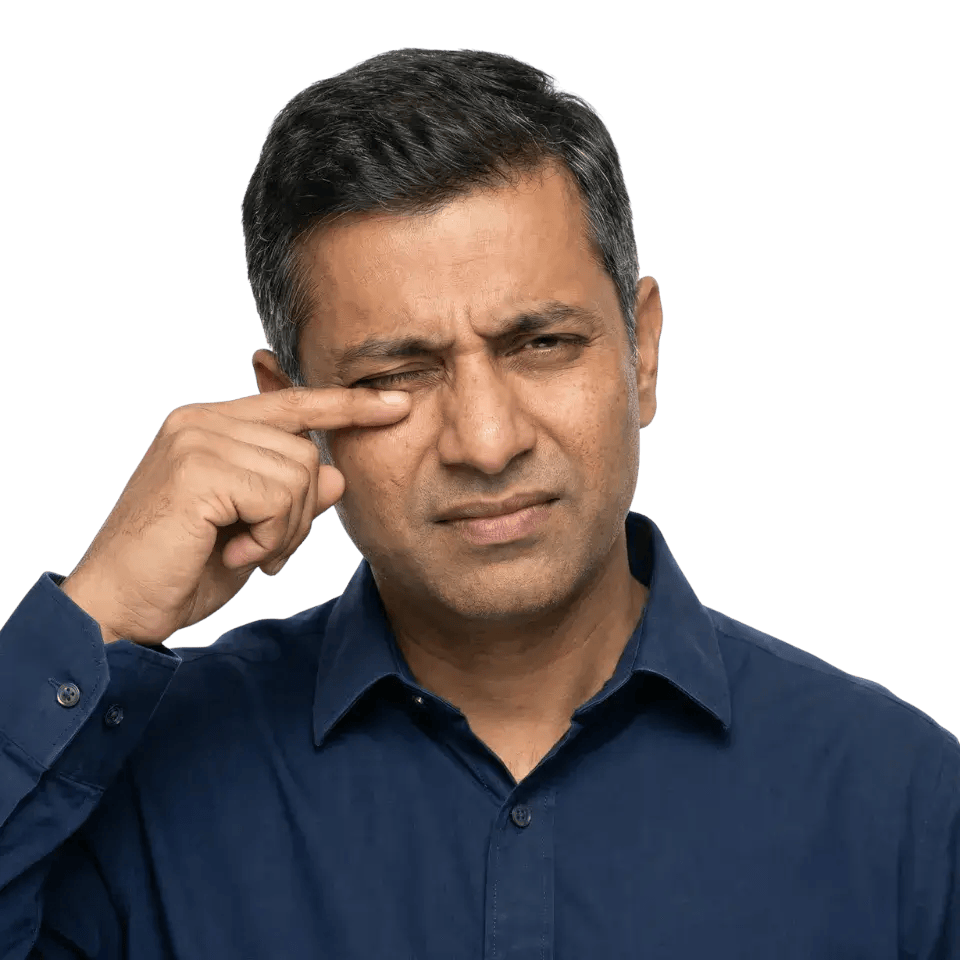
Warning Signs Your Eyes Are Suffering from Poor Sleep
Your eyes communicate when they are not getting enough rest. Knowing which symptoms to watch for can help you connect your eye discomfort to your sleep habits and take action sooner.
Fatigued eyes lose their ability to hold sharp focus, and you may notice your vision is clearest in the morning and gradually becomes hazy by afternoon or evening. This kind of fluctuating blur is different from a refractive error like nearsightedness. It tends to improve briefly when you blink or close your eyes to rest, though the relief does not last long.
Dryness is one of the most frequent complaints we hear from patients who are not sleeping well. Your natural blink rate can slow when you are exhausted, and tear output decreases, leaving eyes feeling scratchy, sandy, or like they are burning.
- Symptoms often begin mild but worsen over weeks of poor sleep
- Wind, screen time, and air conditioning make dryness worse
- Your eyes may water excessively as they try to compensate for dryness
- Long-term dry eye can cause irritation on the surface of the cornea
The skin around your eyes is very thin, so it shows the signs of poor sleep faster than almost anywhere else on your face. Fluid can pool underneath your eyes when you do not rest long enough, creating puffiness, while blood vessels close to the skin surface become more visible and create dark circles. Persistent swelling can occasionally point to other health concerns, which is something we look for during your exam.
If your eyes ache or feel heavy after just a short time at a computer or with a book, sleep deprivation may be a contributing factor. Fatigued eye muscles cannot maintain focus for as long as rested ones, leading to headaches, neck tension, and the urge to close your eyes. This fatigue often overlaps with digital eye strain and makes both conditions harder to manage.
Most symptoms linked to poor sleep are uncomfortable but not dangerous. However, certain signs require prompt attention and should not be attributed to tiredness without a professional evaluation. Contact us right away if you experience sudden vision loss, new flashes of light, a sudden shower of floaters, severe eye pain, or any discharge that might suggest infection.
Symptoms that do not improve after sleep quality gets better also deserve a thorough evaluation, since an underlying eye condition may be involved.

Who Is Most at Risk for Sleep-Related Eye Problems
While anyone can experience eye symptoms from a poor night of rest, some people are more likely to develop ongoing problems. Understanding your personal risk factors helps us provide care that addresses the full picture.
Conditions like insomnia, obstructive sleep apnea, and restless leg syndrome fragment or shorten sleep in ways that leave your eyes without adequate recovery time. Even patients who spend plenty of hours in bed may not be getting the restorative sleep their eyes need if the quality is poor. Treating the underlying sleep disorder is an important part of resolving eye symptoms, and we may coordinate care with your primary care provider or a sleep specialist.
People who work overnight shifts or rotate schedules face unique challenges because their sleep patterns conflict with the body's natural rhythms. Tear production and eye repair processes are tied to circadian cycles, so irregular sleep tends to leave eyes drier and more easily fatigued.
- Irregular hours disrupt the hormonal signals that regulate tear production
- Daytime sleep is often lighter and less restorative than nighttime sleep
- Bright workplace lights and night driving add extra strain
- Long-term shift work is associated with a higher risk of chronic dry eye
Using phones, tablets, or computers in the hours before sleep delays your ability to fall asleep and reduces sleep quality. Blue light from screens suppresses melatonin, the hormone that signals your body to wind down. Screen use also slows your blink rate, which compounds dryness and makes the cycle harder to break. Setting a screen curfew one to two hours before bedtime can meaningfully improve both sleep and eye comfort.
Wearing contact lenses reduces the oxygen supply reaching the surface of your eye, and this effect is made worse when poor sleep leads to reduced tear production. Extended wear hours and falling asleep in lenses multiply the risk of irritation and infection. If your eyes feel dry and fatigued, removing your contacts earlier in the evening gives your eyes extra time to breathe and recover.
You should never sleep in lenses unless they have been specifically approved for overnight use by your eye care provider, and even then, good sleep habits and regular follow-up are essential.
Conditions like dry eye disease, blepharitis (inflammation of the eyelid margins), and allergic conjunctivitis become more difficult to manage when sleep is poor. Inflammation tends to increase, and the immune system is less effective at keeping symptoms in check. Poor sleep may also affect intraocular pressure, the fluid pressure inside the eye, in ways that are relevant for patients managing glaucoma.
If you already have an eye condition, treating sleep as part of your overall care plan can make a real difference in how well your symptoms are controlled.
How We Diagnose Sleep-Related Eye Problems
A careful evaluation helps us determine whether poor sleep is the main driver of your symptoms or whether another condition is contributing. The more openly you share your daily habits, the better we can tailor your care.
When you come in, we will ask about your sleep schedule, screen habits, work hours, and the specific symptoms you have noticed. Be prepared to describe when symptoms are worst, how long they have been happening, and whether they improve on days when you sleep better. Details about other health conditions and any medications you take are also helpful, since some medications affect tear production and sleep quality.
A full eye exam includes checking your visual sharpness, eye pressure, and the health of your retina and optic nerve. We also examine the front surface of your eyes and evaluate how well your pupils respond to changes in light. These tests help us rule out serious conditions and confirm that fatigue is the primary issue.
- The surface of the eye is examined for signs of dryness and irritation
- Pupil response testing shows how your eyes adapt to varying light levels
- Eye muscle coordination tests can reveal whether fatigue is affecting how your eyes work together
- Imaging may be used if we suspect structural or nerve-related concerns
Because insufficient sleep often leads to reduced tear quality or volume, we perform specific tests to measure how well your tears are functioning. Special dyes can reveal how quickly your tear film breaks down, and other tests measure how much tear fluid your eyes are producing. These results help us identify the severity and type of dryness you are experiencing, which guides our treatment recommendations.
Symptoms caused by fatigue can look similar to signs of infection, chronic inflammation, thyroid eye disease, or glaucoma. We carefully evaluate all possible causes before concluding that poor sleep is the main factor. In some cases, blood tests or a referral to another specialist may be appropriate to get a complete picture.

Managing Sleep-Related Eye Problems
Treatment depends on the severity of your symptoms and whether an underlying condition is involved. In many cases, improving sleep quality leads to noticeable relief on its own, but we have several additional tools to help speed your recovery.
Improving your sleep routine is the most important step toward relieving eye symptoms. Going to bed and waking up at a consistent time each day, even on weekends, helps regulate the body's internal clock. A cool, dark, and quiet bedroom environment supports deeper, more restorative sleep. Avoiding caffeine and large meals in the evening also makes a difference. Many patients notice meaningful improvement in dryness, redness, and strain within one to two weeks of more consistent rest.
Artificial tears provide immediate comfort for dry and irritated eyes while you work on improving your sleep. Preservative-free formulas are the best choice if you need to use drops more than four times per day. Gel drops and overnight ointments offer longer-lasting moisture for patients with more significant dryness.
- Apply drops before activities known to worsen dryness, such as screen use or outdoor wind exposure
- Keep a bottle accessible at your desk, in your bag, and near your bed
- Avoid redness-relieving drops that do not address the underlying dryness
- Ask our team which formulation best matches your specific symptoms
When lubricating drops alone are not enough, prescription medications can increase tear production or reduce the inflammation that interferes with tear function. These treatments are well-established options for patients with chronic dry eye that has been worsened by poor sleep. Some patients also benefit from in-office eyelid treatments or warm compress therapy, which we may recommend if your symptoms are moderate to severe.
Reducing blue light exposure in the evening can support your body's natural sleep preparation by limiting the suppression of melatonin. You can activate blue light filter settings on most devices or wear blue light filtering glasses during evening screen use. Setting a screen curfew one to two hours before bedtime is an even more effective step. During the day, following the 20-20-20 rule, which means every 20 minutes looking at something 20 feet away for at least 20 seconds, helps reduce eye muscle fatigue from prolonged near focus.
If you wear contact lenses and your sleep is poor, consider reducing your daily lens wear time to give your eyes more opportunity to recover. Switching to glasses in the evening allows your cornea to receive more oxygen and reduces the dryness that builds up over a long day of lens wear. Daily disposable lenses can also be a helpful option because they eliminate the buildup of deposits that can worsen discomfort.
Sleeping in contact lenses, unless your eye care provider has specifically approved a lens for overnight use, significantly increases the risk of serious infections and should be avoided.
Depending on your symptoms, we typically schedule a follow-up visit a few weeks to a few months after beginning treatment. These appointments allow us to assess whether your eye comfort is improving, confirm that sleep changes are helping, and adjust your care plan if needed. Ongoing monitoring ensures that any symptoms that persist or worsen are addressed early, before they become harder to treat.

Frequently Asked Questions
Here are answers to some of the questions we hear most often from patients concerned about how sleep affects their eyes.
A single night of poor sleep will not cause lasting eye damage. The redness, dryness, or blurry vision you notice the next day is temporary and resolves with rest. The concern arises with ongoing sleep deprivation over weeks or months, which can contribute to chronic dry eye and other conditions that may require active treatment to reverse.
Most adults need seven to nine hours of sleep per night for their eyes to recover properly, though individual needs vary. The quality of sleep matters as much as the quantity. Fragmented or shallow sleep, even if you are technically in bed for eight hours, may not provide the level of repair your eyes need to stay comfortable and your vision to remain stable.
Regularly sleeping in contact lenses significantly raises the risk of a serious infection called microbial keratitis, which is an infection of the cornea that can cause scarring and lasting vision loss. Even lenses that are labeled for extended wear carry some risk. Unless your eye care provider has specifically cleared you for overnight wear and discussed the precautions involved, removing your lenses before sleep is always the safer choice.
Sleep apnea, a condition in which breathing repeatedly stops and starts during sleep, is associated with several eye problems including floppy eyelid syndrome, elevated eye pressure, and potential changes to the optic nerve. The disrupted oxygen levels and poor sleep quality that come with untreated apnea create real risks for eye health over time. If you snore heavily, wake up gasping, or feel persistently exhausted regardless of how much time you spend in bed, speaking with your doctor about a sleep evaluation is worthwhile.
Blue light filtering glasses may reduce melatonin suppression from evening screen use, which can support falling asleep more easily. During the day, they may help some people feel less eye fatigue from extended screen time. They work best as one part of a broader strategy that includes limiting screen use in the hour before bed, taking regular breaks, and prioritizing consistent sleep hours. They are not a substitute for good sleep habits on their own.
Yes, noticing mild blurriness or difficulty focusing when you are fatigued is common and usually not a cause for concern. Fatigued eye muscles simply cannot sustain precise focus for as long as rested ones, and the visual system as a whole is less efficient when you are sleep deprived. If blurry vision persists after you have caught up on rest, or if it comes on suddenly or without explanation, scheduling an eye exam is the right next step to rule out other causes.

Visit Us for Sleep-Related Eye Care
If poor sleep has been affecting your eyes, our team at ReFocus Eye Health is here to help you get to the root of the problem and find real relief. We serve patients throughout the greater Bloomfield area and are experienced in evaluating and treating a full range of sleep-related eye concerns. Whether you need a thorough exam, guidance on managing dry eye, or help navigating contact lens wear, we are committed to supporting your long-term eye health with personalized, compassionate care.

1st time at Bloomfield office was wonderful; clean, welcoming, and with excellent staff. The doctor made my daughter and me feel comfortable. Amazing service, highly recommend Refocus!
Sexy K Esson
My first visit was great; staff were courteous, explained everything clearly, even my insurance. The doctor was kind, and ordering glasses was smooth. Felt cared for, not rushed. Well done!
Rod Clement
I’ve seen Dr. Kevin Dinowitz at Primary Eye Care in Bloomfield for 20+ years. He found my retinal tear and sent me for laser treatment that saved my sight. Staff is great, and I recommend him to all.
Joyce Harmon
PEC in Bloomfield is always efficient with friendly staff. I’ve been very satisfied with my care and appreciate that they don’t push glasses, though the on-site option is convenient.
Jay Kean
I have been a patient of Dr Dinowitz for many years. He is caring and knowledgeable and has a great staff
June Kish

Contact Us

Tuesday: 8:30am-5pm
Wednesday: 8:30am-5pm
Thursday: 8:30am-5pm
Friday: 8:30am-5pm
Saturday: Closed
Sunday: Closed